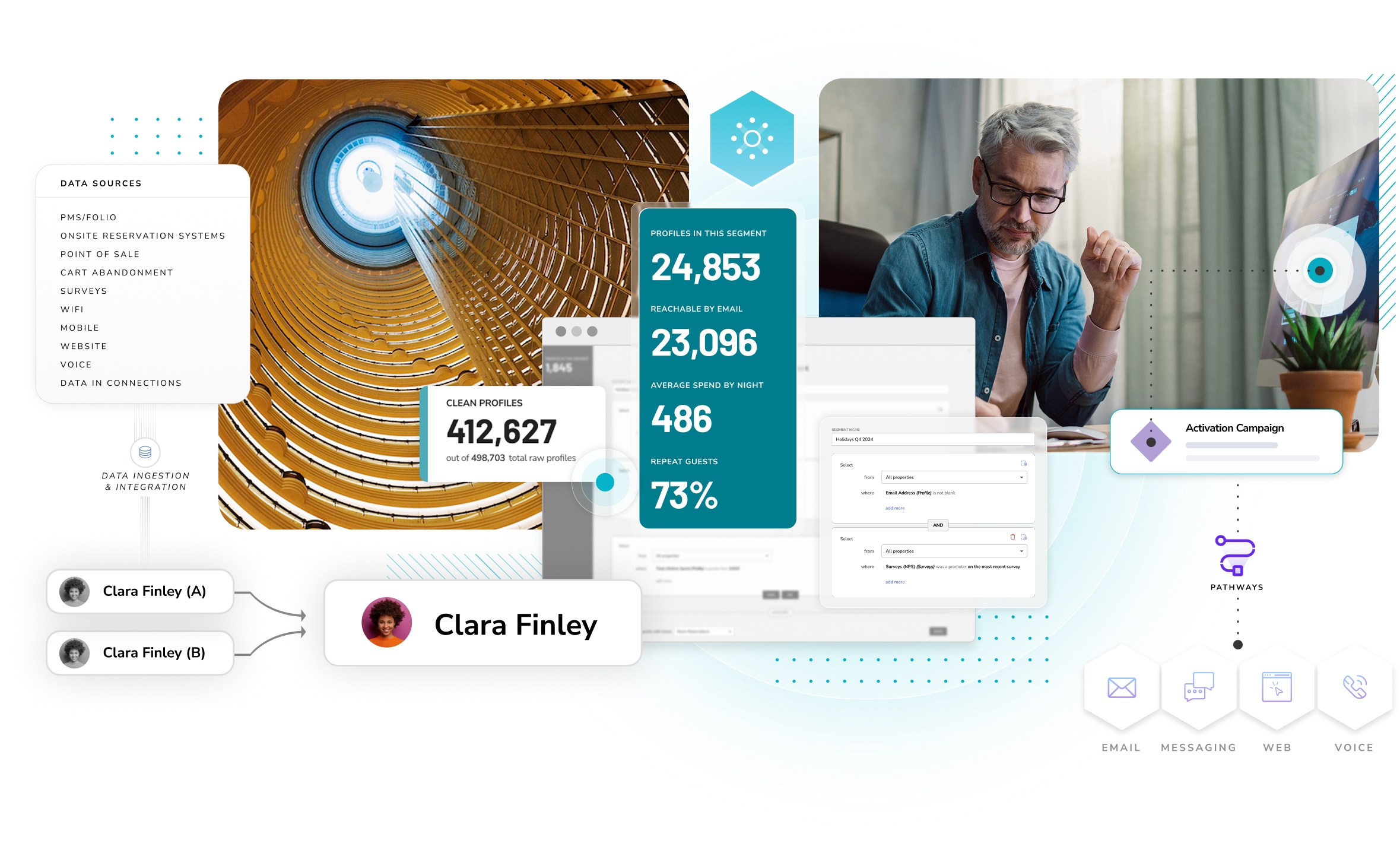
From sending campaigns to managing relationships
Hotel marketers were working campaign by campaign. Revinate Marketing primarily supported batch email, so follow-up depended on creating separate campaigns and coordinating them manually. A guest who had booked, ignored an offer, or shown interest could still encounter the same static messaging.
The opportunity was to make communication respond to the guest. For the business, that meant supporting direct bookings and more relevant offers throughout a stay. For marketers, it meant coordinating audience, timing, content, and follow-up in one place.
The design challenge: give marketers the power of conditional automation without requiring them to understand every branch, channel, and delivery rule before they could get started.
One designer, from concept through initial launch
I conceived Pathways and owned the product experience from scratch: the settings, workflow model, interactions, and experience through initial launch. I partnered with Product, Engineering, Sales, and customers to work through usability, commercial expectations, and delivery constraints.
- Product definition: turn a collection of campaigns into a connected journey with a clear model for triggers, conditions, messages, and delays.
- Interaction design: translate guest profile information and behavior into understandable conditions, templates, and recommended next steps.
- Cross-functional decisions: resolve how much control belonged with the marketer and how much the system should handle.
After the initial launch, I handed the product over for maintenance, additional integrations, and incremental improvements.
Make the journey the unit of work
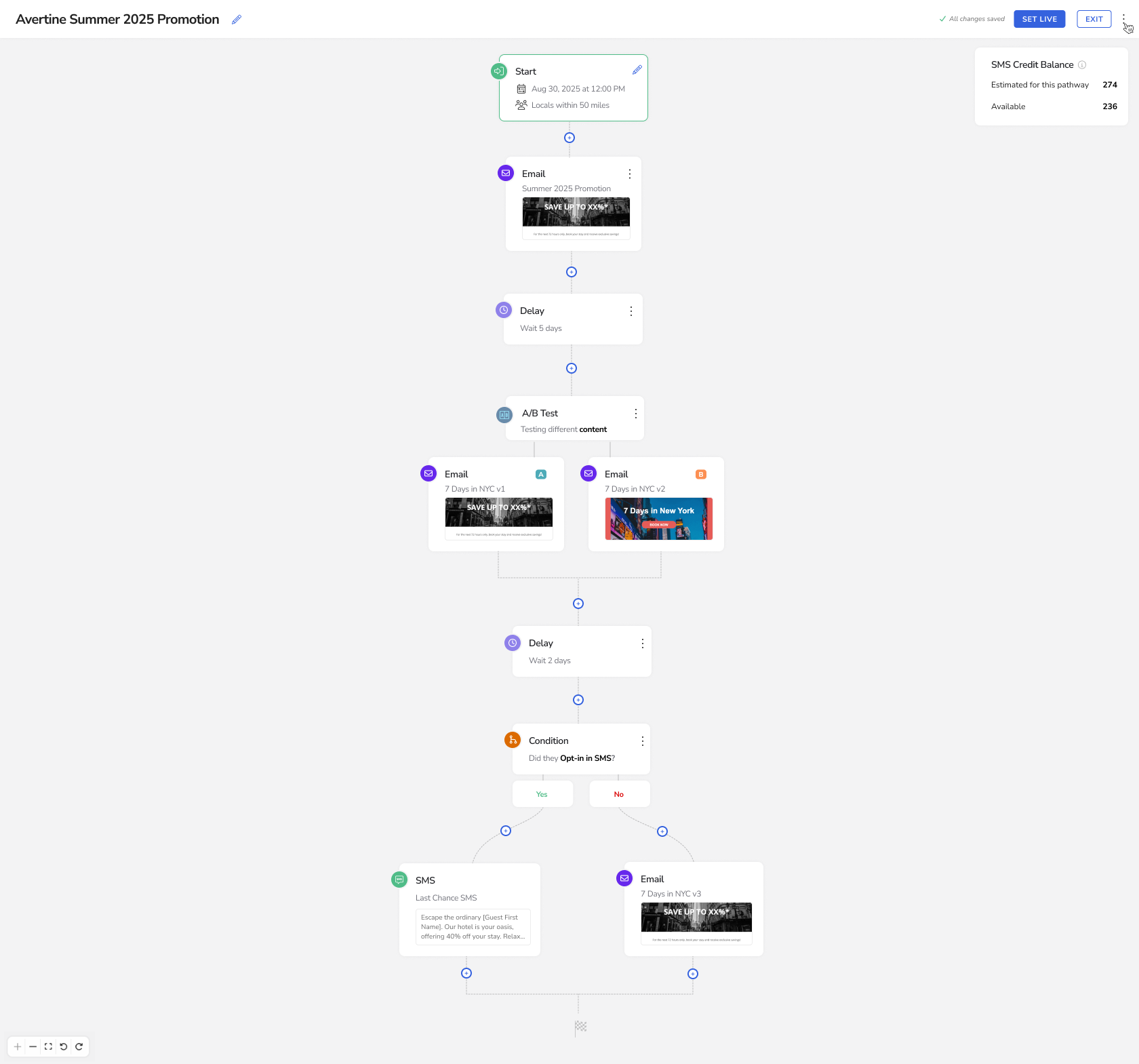
The key shift was from designing individual sends to designing a sequence that adapts. A message, a wait, and a decision need to make sense together, so the marketer can reason about what a guest will experience next.
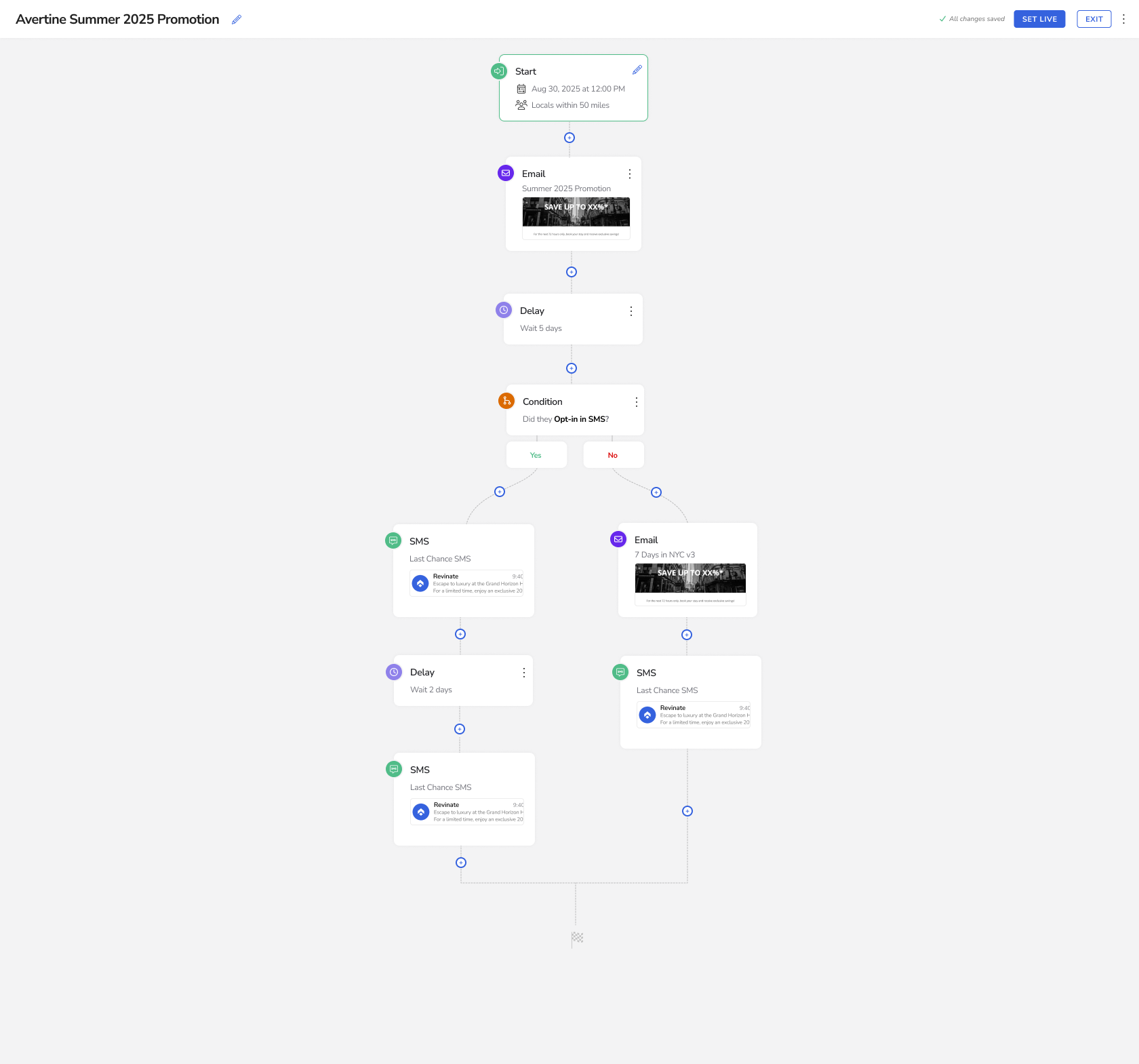
For example, a guest who clicks an offer but abandons checkout can receive a different follow-up days later. A guest who never opens the email may need another channel or message. These are branches of one journey, rather than unrelated campaigns.
Use building blocks that match the domain
I organized the experience around a small set of reusable parts, expressed through the events and decisions hotel marketers already work with:
- Triggers: establish why a guest enters a journey, using moments such as booking, check-in, check-out, cancellation, or a calendar date.
- Conditions: route guests according to behavior and profile information, such as opens, clicks, or future stay status.
- Delays: make timing an explicit part of the workflow, using elapsed time or a specific date.
- Messages: connect the audience and timing to the content a guest receives.
This model makes the logic tangible: when the guest's situation changes, the next step can change with it. It also gives the experience a consistent structure as more channels become available.
Design for expansion while respecting delivery scope
The broader experience was designed to accommodate email, SMS, webchat, WhatsApp, WeChat, and social publishing. That was a design horizon, with backend integrations and customer entitlements determining availability. Keeping a consistent journey model across channels was central to that approach.
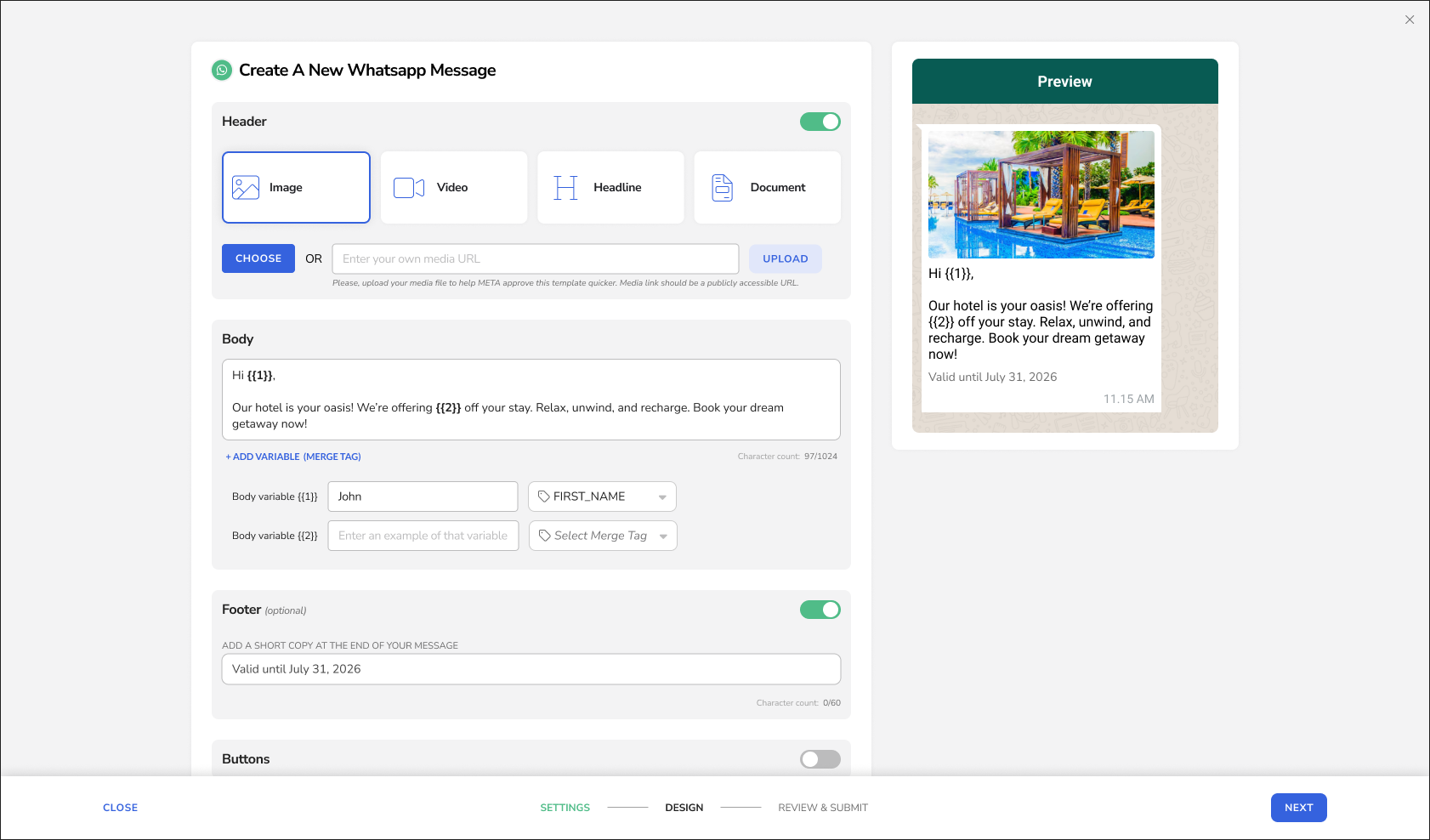
Offer a starting point before asking for decisions
The amount of available data and configuration was the primary usability challenge. Marketers needed to turn guest profile information, engagement, and stay status into decisions about who should receive a message and what should happen next. A blank workflow would ask them to solve that logic before they could focus on their audience and message.
I designed template workflows and recommended next steps to provide a starting point. Recommendations reflected industry best practices, while editable settings let marketers adapt the sequence to their needs.
Conditions made the underlying data actionable within the journey: whether a guest had clicked an offer or already had a future stay could change the next step. My design work connected those decisions to messages and delays in the same workflow, so marketers could reason about the sequence as a whole.
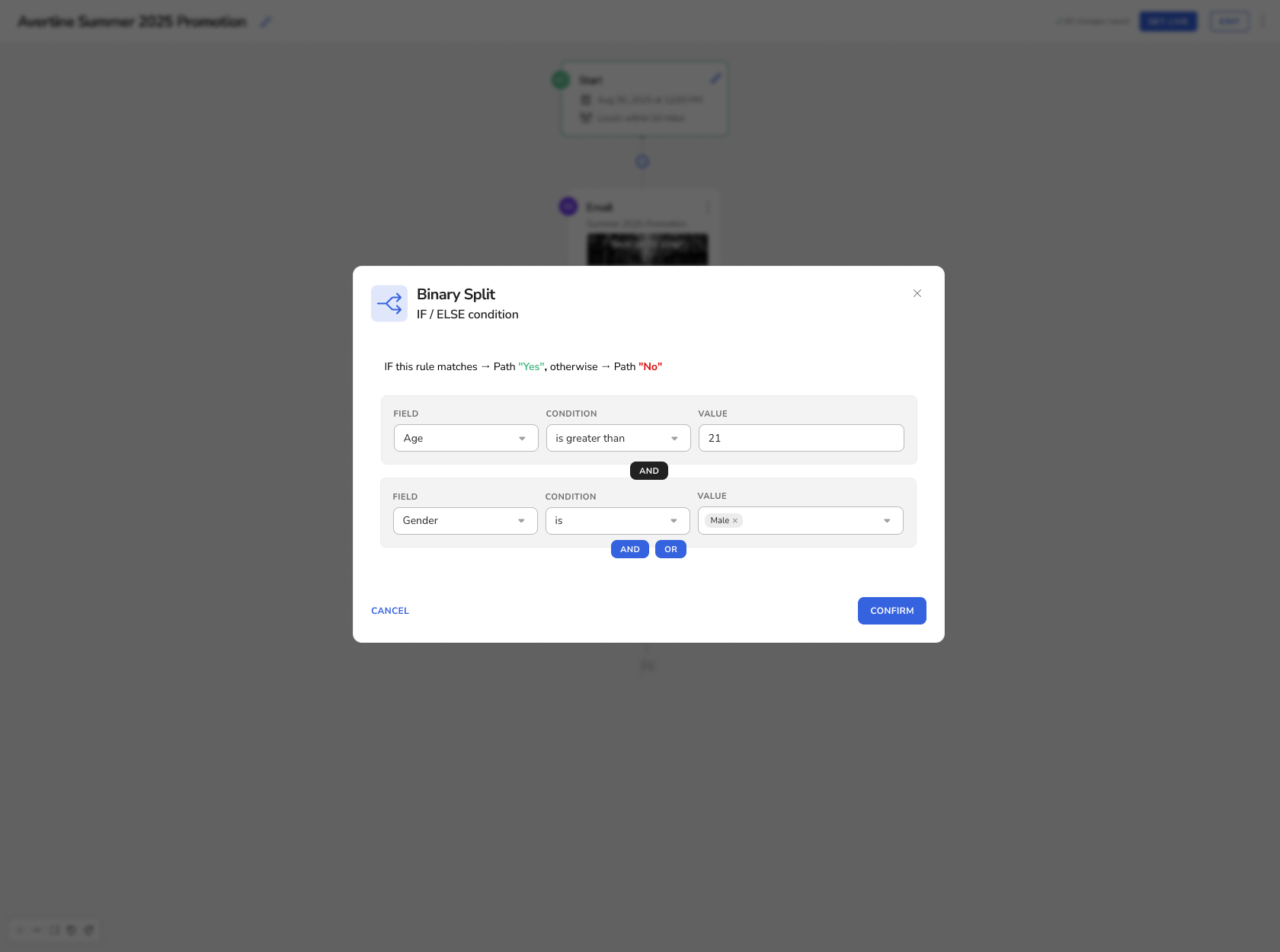
The balance was deliberate: guidance should reduce the work of getting started while leaving room for a property's goals and operating context. Internal call-center teams and external customers participated in testing and feedback.
Negotiate control at the right level
Automation creates risks beyond a confusing interface. Closely stacked messages can strain guest relationships, and a burst of responses can overload hotel websites or call centers. I proposed safeguards to address both.
Product and Sales raised a competing concern: restrictions could make paying customers feel constrained or push them toward workarounds. This became a decision about where control belonged.
Separate journey pacing from delivery mechanics
The solution gave customers control over message spacing within system-defined guardrails, while the backend handled queues and batching. Marketers could shape the guest experience without managing granular delivery mechanics.
- Channel exclusivity prevented the same message from being sent simultaneously through email and SMS.
- Required pauses limited how closely messages could be stacked in a journey.
- System-managed delivery kept operational scheduling out of the workflow configuration.
The compromise preserved meaningful customer choice while giving the system responsibility for pacing and delivery constraints.
Keep review history connected to the journey
The approval design places comments and status history beside the workflow. Reviewers can see feedback on message content and timing alongside the journey it refers to, with a record of who commented and when approval changed.
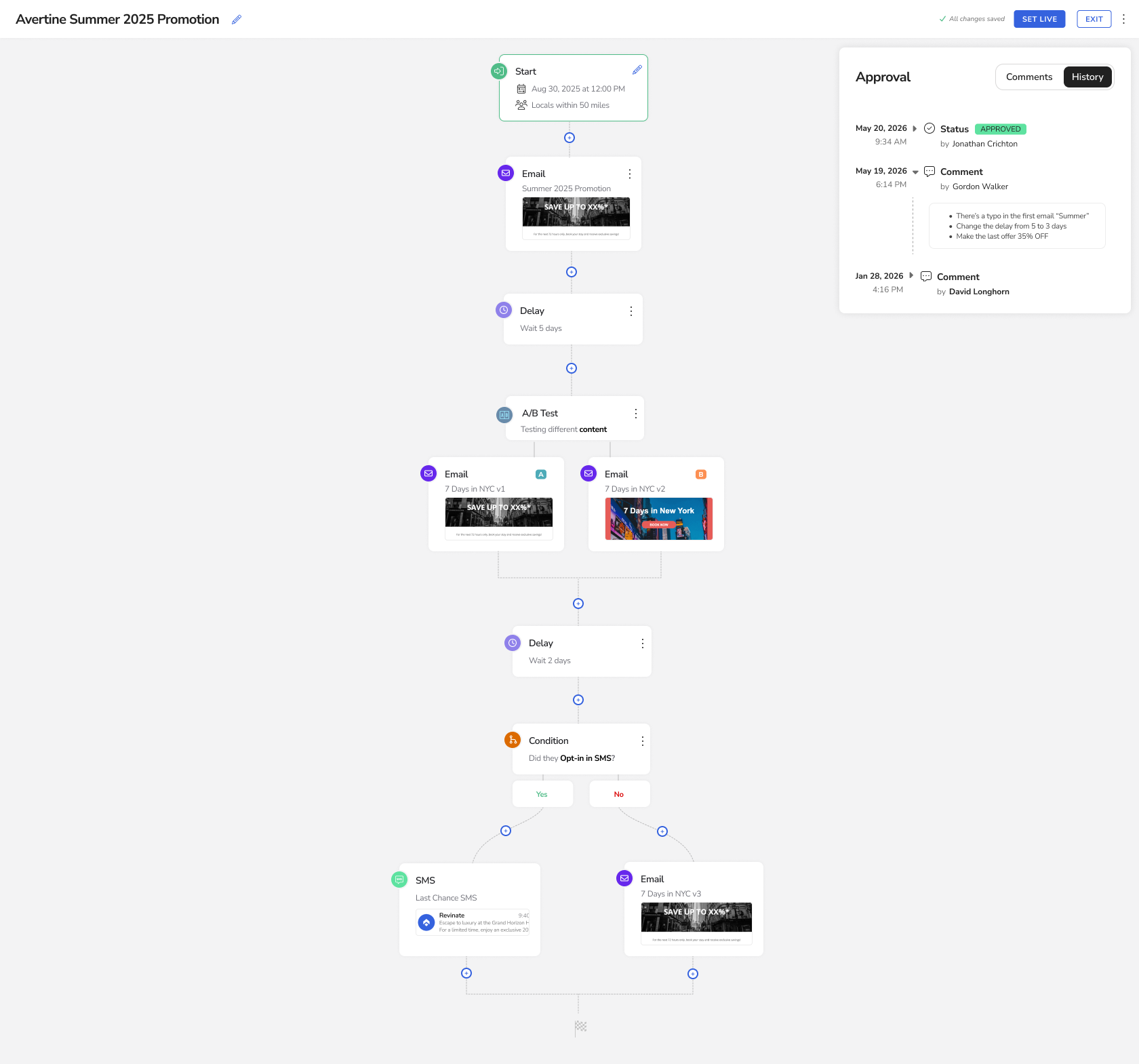
A foundation for connected guest communication
Through initial launch, my contribution brought campaign creation, decision logic, and follow-up into a connected product experience. Templates and recommendations made the workflow approachable; a shared journey model gave it room to grow.
How the product has evolved
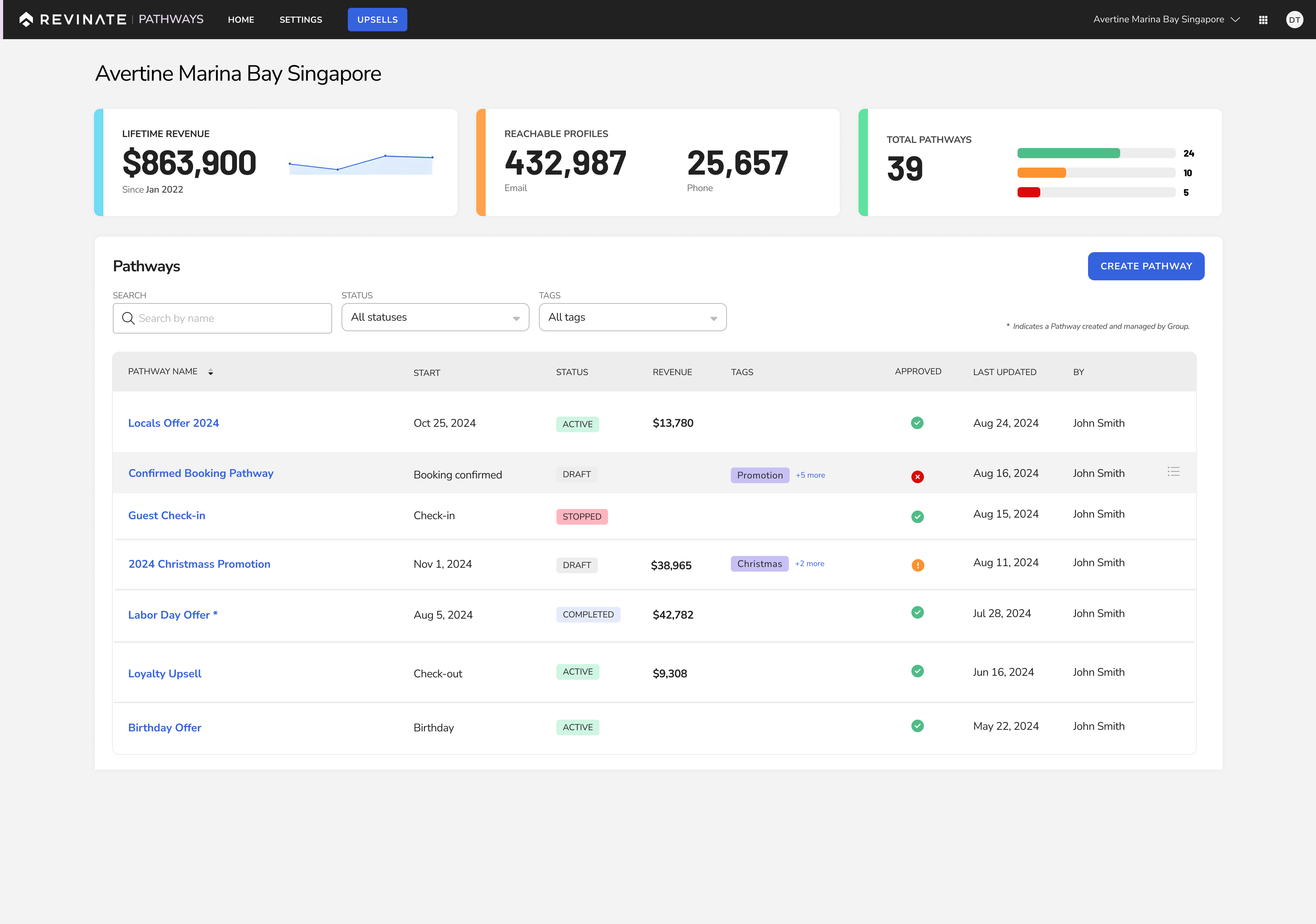
Revinate now describes Pathways as an email and promotional SMS platform powered by unified guest profiles, with WhatsApp planned. Its published capabilities include stay-based triggers, consent and quiet-hour safeguards, and reporting tied to reservations and revenue. These describe the current product, which continued evolving after my handoff.
Complexity needs a clear home
The central design contribution was deciding which complexity marketers needed to see. Journey logic and timing needed to be understandable and editable. Delivery mechanics belonged with the system. Templates and recommendations connected the two, helping marketers move from an intent to a workable journey.
That balance—between a coherent interaction model, customer autonomy, and operational constraints—is the part of Pathways I would carry into another complex enterprise product.